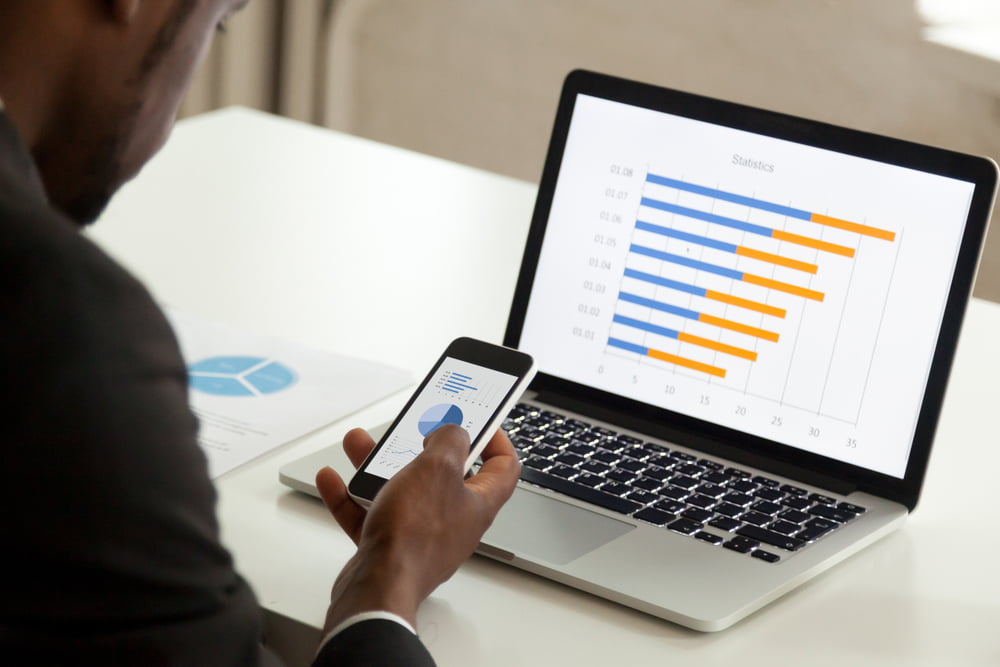
Traditionally, accounting processes were carried out using software and spreadsheets on a desktop computer. With cloud accounting, data can be accessed from any device with an internet connection anywhere in the world.
In line with HMRC’s introduction of the Making Tax Digital (MTD) for VAT programme, many businesses are already using cloud accounting and bookkeeping software.
However, there are many other benefits of cloud accounting that go beyond compliance that can help your business to grow.
What Is cloud accounting?
Cloud accounting is an online system for tracking financial information and managing accounting tasks such as invoicing, payrolls and bookkeeping.
The system allows users to access their data from any device at any time, making it convenient and secure.
There are various cloud accounting systems for small to medium-sized businesses such as Xero, Quickbooks, FreeAgent and Sage that enable you to share data with your staff or accountant.
Also known as ‘online accounting’, cloud accounting generally makes managing your finances and tax affairs simpler, faster and safer.
What are the benefits for my business?
One of the biggest advantages of using cloud accounting is its ability to provide real-time data.
As soon as transactions occur in the system, they are updated automatically which gives you an up-to-date view of your finances.
This makes it much easier to track expenses and budgeting, allowing you to make better decisions about how to allocate resources.
Automation
Cloud accounting services offer automatic bookkeeping and invoicing capabilities, which helps to save time and money by handling routine tasks such as invoice generation, payment reminders, and bank reconciliation.
This improves accuracy while freeing up resources for more important tasks, helping your business to grow without the expense of hiring more staff.
Cost Savings
The cost savings associated with using a cloud-based service are considerable as there is no need to purchase expensive hardware or software upfront. There are also no ongoing maintenance costs associated with keeping it running smoothly.
Additionally, many cloud services charge on a ‘pay as you go’ model so there’s no risk associated with investing in a long-term subscription plan without knowing if it will pay off in the end.
Flexibility
With cloud-based accounting systems, you have the flexibility to work from anywhere at any time since all data is securely stored in the cloud for easy access from any device connected to the internet.
Additionally, many services offer mobile apps so you can view and manage your finances on the go.
This will mean you can expand your business with less cost and complexity as you can cut costs on hiring staff for managing your finances.
Enhanced support
One of the main benefits for businesses is that cloud accounting means a more efficient compliance workflow, reducing the chance of duplication. This means your accountant can spend more time advising on how to grow the business.
Interaction with other software
Accounting software can integrate with partner applications that can create advanced reports, connect to sales tools and inventory systems and forecast your cash flow.
If you have found this article useful, it is the latest in a series of blogs on how cloud accounting works for business.
Need advice on how cloud technology can help your business? Contact us today.


