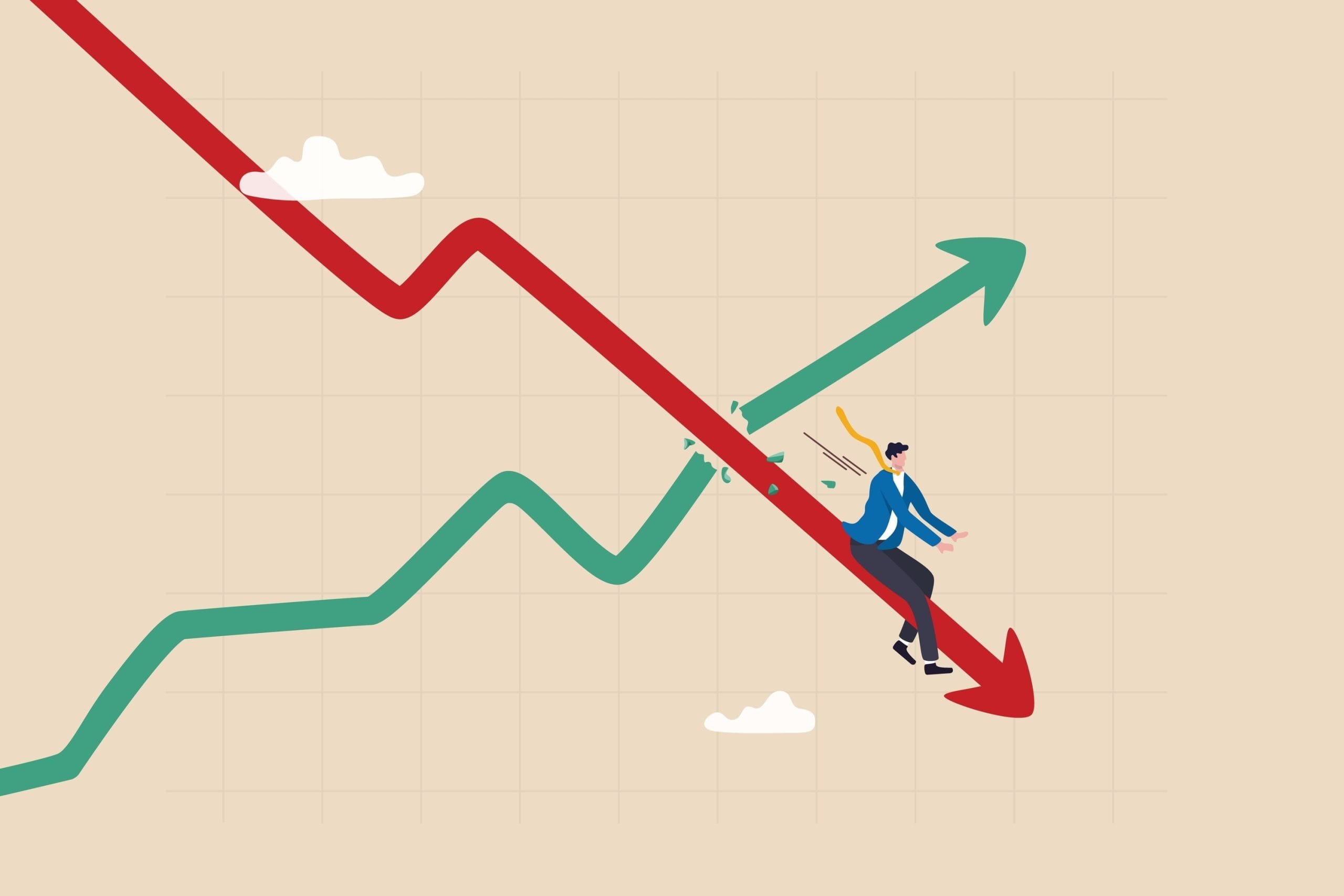
If you have found yourself scrolling the financial headlines with a growing sense of unease, you are far from alone.
The iwoca SME Expert Index for Q1 2026 shows that recession fears among SMEs are at a two-year high, with 54 per cent of finance brokers reporting client concern – up from 42 per cent at the end of 2025.
The question on many business owners lips is are we heading for a recession?
The honest answer is that nobody knows for certain, but the current evidence suggests that SMEs are right to be taking the risks seriously and would be wrong to simply wait and see.
What the data on recession in the UK is telling us
Drawn from a survey of finance brokers working directly with small businesses, iwoca’s research paints a picture of mounting pressure amongst UK SMEs:
Clearly, the concern amongst SMEs is very real, but the realities of the UK economy don’t immediately point to an imminent recession.
While most experts tend to agree that CPI inflation, which currently stands at 3.4 per cent, is unlikely to fall below three per cent this year, the rate is still below previous rates of high inflation seen in recent years.
The result, according to iwoca, is that fewer SMEs are likely to borrow, with only 57 per cent of brokers now forecasting rising demand for finance — down from 74 per cent in Q4 2025.
Is the UK heading for a recession?
Inflation, higher interest rates, geopolitical instability and supply chain fragility are not independent issues, they tend to compound each other and are felt most acutely by smaller businesses with limited financial buffers.
SMEs cannot easily absorb margin erosion across multiple cost lines simultaneously, but the results of the research point to falling SME confidence not the precursor to recession.
For the UK to officially enter recession it needs to have two consecutive quarters of negative GDP growth. According to the latest forecasts, the UK is predicted to see marginal growth over the next two quarters, but isn’t likely to fall into negative growth.
While recession doesn’t seem likely, the nation faces a similarly challenging issues – stagflation.
This is a period of minimal economic growth and rising inflation. This is a difficult issue for either the Government or Bank of England to address, especially given the geopolitical factors that are in play.
To SMEs stagflation can feel just as challenging as a recession and, therefore, it is important that they seek advice and plan for tough times ahead.
How to build greater resilience in your business
The best plan of attack for businesses facing uncertainty has consistently been time to prepare before you need to.
Here are the areas to focus on to build greater resilience in your business:
Act now, not later
Recession or not, the conditions facing UK SMEs in 2026 are genuinely difficult and the businesses that will come through strongest are those taking action now, rather than waiting for certainty that may never arrive.
We work with owner-managed businesses providing the practical financial guidance, planning support and straight-talking advice that helps businesses overcome economic uncertainty.
If you would like to talk through what the current commercial climate means for your business, our team is ready to help. Contact us to arrange a consultation.


